Sunday, February 14, 2010

Love Exposure (Sion Sono, 2008)

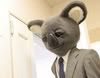
Hikari Mitsushima as Yoko in Love Exposure (2008).

I've never been a big fan of Sion Sono, perhaps unfairly since I've only seen three of his earlier films, Suicide Circle (2001), Strange Circus (2005) and Exte (2007) and they all felt too fragmented and unfinished to be really enjoyable, even though they also had their high points. Going into Love Exposure I kept my earlier experiences with Sono in mind while at the same time being excited about finally getting to see it after reading all the reviews and top 10 lists claiming it to be the movie of the year in 2009. I have to admit though that arguments like "it's 4 hours long, how original!!" and "it's full of crazy!!!" doesn't do it for me like it did 10 years ago when I started out watching Japanese films.

So what's it about? Well, it's hard to say, for a movie with a four hour running time I felt that Love Exposure manages to say very little about the subjects it brings up, religion, extremism, love, passion, acceptance, sex and sin. I guess finding balance between the body and mind, religion and love without letting one or the other take over completely is a theme in the movie, perhaps best represented in the character of the father who decides to become a catholic priest after his wife dies and then finds love again with another woman, who later leaves him which turns him even more into a religious fanatic.

The main part of the story is a love triangle between Yu, the son of the priest, who is forced to commit sins so he'll have something to tell his father in confession which makes him turn to photographing girls' underwear in the streets, Yoko, a high school girl who was sexually abused by her father and is now a man hating ass kicking machine who has run away together with her stepmom Kaori who is the love of Yu's father and Koike, another teenage girl who is a member of the Zero Church cult and who, for some reason, wants to ruin Yu's relationship with Yoko and his family. So basically it's four hours of identity mix-ups, kung fu, praying and up skirt photography.

My feeling here is that I probably just didn't get it, the characters struggles with their emotions probably would mean more to someone who's better suited to analyze these things, but at the same time, I'm not sure that there is so much more beneath the surface. The film gets repetetive very quickly. Even though the settings change, four hours is a lot to sit through. It's the same situations over and over, the same dilemmas and with the performances more often than not being closer to annoying than brilliant, with the exception of Atsuro Watabe as the priest and Sakura Ando as Koike, the long running time takes its toll.

I have to say though that it's not an uninteresting film, it's still with me a few days after I've seen it, and even though I'm sure I won't ever sit through it again, this won't be the last time it crosses my mind. Sono manages to cram a lot into it, as he should with a running time like this, and while it's not executed flawlessly I feel that I'm more interested in seeing what he comes up with next than I was before. As for Love Exposure being the best film of 2009 I have to disagree, but it's not surprising it made those lists with ingredients like panty shots, girls in high school uniforms beating up guys, a lot of references to 70's pinky violence films with Yu dressing up like Meiko Kaji's Scorpion character and other random craziness. It's a geek fest.

Saturday, February 6, 2010

In the mood for Love Exposure

Sion Sono's Love Exposure (2008).

Since the beginning of December I've been really busy at work, starting a new job and working 16 hour days has made me too tired to watch anything. For the last two months I've watched zero films. I started watching Bong Joon-Ho's Mother (2009) and got about 20 minutes into it before I fell asleep, not because of the film but just because I've been too tired to care. Even though I have a big pile of dvds that I'd like to watch, I just haven't felt interested, until now.

Sion Sono's Love Exposure (2008) just arrived in the mail and while I haven't read anything about the story I haven't been able to avoid the headlines calling it movie of the year and after it made the top spot on several of the writers at Midnight Eye's year end lists, I just can't wait.

Sunday, November 29, 2009

Zombie Self-Defense Force (Naoyuki Tomomatsu, 2006)

Zombie Self-Defense Force (2006).

Part one of the Nihonbi trilogy, Naoyuki Tomomatsu's Zombie Self-Defense Force starts off with a long monologue where the director speaks about how Japanese WW2 veterans have been treated, and war crimes commited by the US in Japan during WW2 and Iraq in present day. Taking into consideration what film you are watching makes the speach a little harder to take seriously and when it's all tied up with the line that there are good things about America too, like George A. Romero, it's obvious where this is going.

The story is simple, a UFO crashes, turns every dead person in the area to zombies, and a group of random people, some of them members of the Japan Self-Defense Forces, are stuck in a house in the country side and have to battle it out with the zombies. Sound familiar? Tomomatsu also manages to include a legend about a super patriotic soldier from World War 2 who is buried in the woods and has never been able to rest in peace because of the way that Japanese soldiers are remembered, and a cyborg, an alien, and a zombie baby along with references to Kinji Fukasaku's Battles Without Honor and Humanity (1973) and a bunch of other films.

I don't really have much to say about Zombie Self-Defense Force, the acting was bad, the effects were cheap and the story was a mess, like it should be in a film like this. Tomomatsu keeps the action going almost throughout and the films does move at a better pace than its sequels, still I think this will be the last of these lowbudget gore films I'll watch in a while, somehow I always get my hopes up, expecting something more than just blood, but they never deliver. It's like they have all the right ingredients but it never adds up to a good whole.

Monday, November 16, 2009

Samurai Princess (Kengo Kaji, 2009)

AV idol Aino Kishi as Gedohime in Kengo Kaji's Samurai Princess (2009).

Another Japanese gore flick in the vein of The Machine Girl (Noboru Iguchi, 2008) and Tokyo Gore Police (Yoshihiro Nishimura, 2008) among others. This time out the setting is something reminiscent of Death Trance, where people seem to be living in a wasteland and both swords and guns are being used. A runaway scientist is making mechanical implants on people and also using body parts to build his own creations. Two of his androids are running amok, killing everyone they meet, especially young girls, after letting their band of criminals rape them. One girl survives their attack and is approached by the scientist who wants to make her too into an android so that she can avenge her friends.

So is there any difference to other films like this? Not really. It starts off pretty good but quickly turns into a slow mess of flashbacks and a totally unnecessary love affair. Nishimura is behind the special effects in Samurai Princess and limbs are literally flying everywhere and there are some great gore, like when the main bad guy punches the skeleton out of a guy. The big problem is the story and pacing, when a film like this actually manages to hold it all together without grinding down to a complete halt before going into the final showdown it'll be a fun ride, but Samurai Princess gets derailed after about 10 minutes.

I really feel like I'm repeating myself with these films, maybe I should just give up on them. But still I can't help wanting to see Robo-geisha (Noboru Iguchi, 2009) and Vampire Girl vs. Frankenstein Girl (Yoshihiro Nishimura, Naoyuki Tomomatsu, 2009), maybe I'm still looking for the next great Japanese zombie/action film, the next Versus (Ryuhei Kitamura, 2000).

Monday, November 2, 2009

Favorite moment #2: The Bird People in China (Takashi Miike, 1998)

Masahiro Motoki and Renji Ishibashi on a quest for jade in China.

Since I just crapped all over a Miike-film, I figured I would list a scene from one of his films that I still find myself thinking about even though I haven't seen the film that features it for years. I don't remember the exact circumstances around it but it's somewhere along Masahiro Motoki and Renji Ishibashi's trip to a small mountain village in rural China and they're having a rest and discussing something, as far as I recall. For some reason Ishibashi's yakuza thug gets offended by something white collar worker Motoki says and unexpectedly kicks him right in the face, hard. It made me fall off the couch laughing. It is one of many memorable moments in Takashi Miike's The Bird People in China, the van that's falling apart is another.

Sunday, November 1, 2009

Crows Zero II (Takashi Miike, 2009)

The Crows of Suzuran High.

The follow up to Miike's 2007 hit Crows Zero is basically more of the same. Based on a long running manga by Hiroshi Takahashi, the story tells of rival high school gangs fighting each other and among themselves to gain control over Tokyo's high schools. In Crows Zero II, Genji (Shun Oguri) has captured Suzuran High by beating Serizawa (Takayuki Yamada) in the first film, but he has failed at uniting the different factions at the school and beating loner giant Rindaman. But with the release of former Suzuran student Kawanishi (Shinnosuke Abe) from prison, bigger trouble than petty infighting are headed for Genji and everyone else at Suzuran High. Two years earlier, Kawanishi, the then leader of Suzuran, stabbed the boss of Hosen Acadamy to death and now the new leaders of Hosen are out for revenge, not just on Kawanishi, but on all of Suzuran's students. This along with Genji's yakuza father (Goro Kishitani) being targeted for a hit by another group doesn't make Genji's life any easier.

The biggest problem I have with Crows Zero and its sequel is the drama, both films feel too much like some teen drama tv-show, where it's hard to take the cheesy dialogue about war and tactics as seriously as the characters seem to do, and to believe that these scrawny actors are actually brutal fighters. The parallel of Genji's fathers life, with the same kind of conflicts within the yakuza group and with others, showing what the kids of Suzuran High can expect their future to be, and the message that no matter how strong you are, there is always someone stronger doesn't really fit in the film as much as it does as a continuation of Miike's earlier films where unconditional success is rarely seen.

Genji facing off with Rindaman in Takashi Miike's Crows Zero II (2009).

I think the thing lacking in the Crows films compared to Miike's earlier efforts in the kids-knocking-each-other-senseless genre, like the two Young Thugs (1997-1998) and The Way to Fight (1996), is heart. The previous films were actually showing parts of the characters lives and full of warmth and humor between the fights while Crows are merely showing fighting and discussions of tactics on how to recruit more members to their gangs and how to win fights. Even though there are scenes of bonding and the sense of family isn't taken lightly, the emotional impact isn't there in Crows. The only time Crows Zero II really comes to life is in the fight scenes, which surpasses the first film with their energy but still lacks to be really involving. Perhaps the life of the characters are really shown in the fights, as it is their way to feel alive, and afterwards they rarely seem bothered by injuries or the bruises on their faces like it is their natural state.

At 2 hours and 13 minutes, I wish that Miike would have settled for 90 minutes of high school kids beating the crap out of each other and saved the drama for another film.

Tuesday, October 20, 2009

Zombie Hunter Rika (Kenichi Fujiwara, 2008)

Risa Kudo as high school girl Rika in Zombie Hunter Rika (2008).

Kenichi Fujiwara's Zombie Hunter Rika is the third part in a trilogy of unrelated zombie films that started with Stacy (2001) director Naoyuki Tomomatsu's Zombie Self-Defense Force (2006). The second film was the not so great The Girls Rebel Force of Competitive Swimmers (2007) by Koji Kawano who after making his feature debut with the lesbian teen drama Love My Life (2006) seems to have found a home in the horror/gore genre.

The movie starts out with Rika and a friend of hers from school being attacked by zombies and being saved by a yakuza who, incidentally, is headed to the same place as Rika, her grandfather's house. Rika's grandfather is a famous surgeon who is struggling with dementia, living with his young wife who may only be after his money. They also hook up with a zombie who's slightly more sophisticated than his undead friends. Their mission becomes to defeat the leader of the zombies named Grorian, killing him will make everything go back to normal. The problem is that Grorian has already killed The Zombie Hunter which will cause the US to send missiles over Japan to eliminate the zombies.

Ultra low budget, shot on video, with homemade special effects, Zombie Hunter Rika isn't a perfect film. The lack of special effects is its biggest weakness since a film like this is really about the gore and not the story. In the action scenes the camera always cuts away and all you get to see is blood spraying from off-screen. The action is directed by Versus star Tak Sakaguchi but it doesn't really show until the final showdown between Rika and Grorian, which is actually pretty sweet albeit short, this must be what they spent the money on as it looks like a completely different movie.

Still, I didn't mind Zombie Hunter Rika too much, it has its moments and the music by Hideto Takematsu seems inspired by Nobuhiko Morino's score for Versus and actually helps to heighten the mood in some scenes, making Rika as a whole become something better than its individual parts.

Saturday, October 17, 2009

New titles from Pink Eiga

Usually I wouldn't do this, but since I think Pink Eiga are putting out some really great films, I'll just inform about what they're planning for this fall. Personally I'm most looking forward to Blind Love (2005) from Daisuke Goto, the director of the earlier Pink Eiga release, A Lonely Cow Weeps at Dawn (2003). Visit their site to watch trailers for the films.

Wednesday, October 14, 2009

Invitation Only (Kevin Ko, 2009)

Maria Ozawa in Taiwanese slasher flick Invitation Only (2009).

Invitation Only got some publicity before it's premiere for being Taiwan's first slasher film, and because Japanese porn actress Maria Ozawa has a small role in it, but after the premiere it's been mostly quiet about it and with good reason. Invitation Only starts out with a guy working as a driver being invited to a party by his employer after he accidentaly walked in on his employer and his model girlfriend having sex in the car. At the party there are several people attending for the first time who have all been invited by the people they work for, the only requirement being to write down their craziest fantasy on the back of the invitation for it to come true. Sound too good to be true? It is. And this is when the film stops being good too, if it ever was. It turns out that the organizers of the party are more into torturing and killing their new arrivals than making their wishes come true.

When things are turning ugly for the characters the filmmakers actually manage to bring down the pace of the film and turn it into a sleeping pill. It takes about 45 minutes of eventless running up and down hallways with occassional confrontations with the killers before anything remotely interesting happens, the best thing about the film being the still completely unnecessary set up for a sequel in the final seconds. The only reason to watch the film would be for the gore, there's lots of it and it's very brutal. Not counting pure gore flicks like Tokyo Gore Police, this is probably the bloodiest film I've seen in a while. For me though, it didn't help the film entertain.

Saturday, September 5, 2009

Cruel Gun Story (Takumi Furukawa, 1964)

Jo Shishido in Cruel Gun Story (1964).

Another film from the Nikkatsu Action box set. Again with Jo Shishido in the lead, but not quite as slick and cool as A Colt Is My Passport (Takashi Nomura, 1967).

Shishido plays a criminal being released early from prison after killing the truck driver who hit his sister and made her paralyzed. The early release comes from another gangster having pulled some strings to get Shishido out so he can use him for a job, to rob an armored car transport taking money from a race track to the bank. As always not everyone is what they seem. A typical heist movie, with the Nikkatsu Action borderless element coming down to the American fighter planes constantly flying above and the American GIs visible in bars and in the streets, and Shishido's wish to escape to Brazil along with his sister.

Even if it's not as entertaining as A Colt Is My Passport, Cruel Gun Story is still a great film. Shishido is as ruthless as ever and there are some great shootouts to go along with the beautiful black and white cinematography.

Sunday, August 30, 2009

A Colt Is My Passport (Takashi Nomura, 1967)

Jerry Fujio and Jo Shishido in Takashi Nomura's A Colt Is My Passport (1967).

Part of the new Nikkatsu Noir box set from Criterion, A Colt Is My Passport is one of the "borderless" (meaning something like being influenced by American and European films, stories about escaping, taking place in locations and using situations not common in Japanese films) action films from Nikkatsu released in the 60's. Heavily influenced by western films, it starts out with the sound of gunshots and a spaghetti western theme and it features Jo Shishido as a hitman character that would be more likely in a Hollywood film than in anything from Japan.

Shishido plays a hitman who is hired by a yakuza group to take out the leader of another gang, only problem is, Shishido does the job a little too well and finds himself, along with his accomplice (Jerry Fujio), on the run from the gang whos boss he just killed as well as the gang that hired him.

Trying to get out of Japan, first by plane and then by boat, they are hiding out in Yokohama at a trucker inn where they meet a woman who is also trying to leave her old life behind. It turns out that it's not as easy as just jumping on a ship when the former rival yakuza gangs team up to catch Shishido and Fujio. It all boils down to a desert finale, filmed at a landfill, that is everything you would expect from a showdown in a spaghetti western, only thing missing being a coffin full of guns, instead you get a golf bag this time around.

It's not a complicated film but what makes it really stand out is the acting by Shishido, and this was apparently the film that cemented him as a leading man. Every time he's in the frame he breathes life into the film and there is no doubt who's the toughest guy around. For sheer entertainment it doesn't get much better than this. If the rest of the films in this box set is half as good as A Colt Is My Passport, it will be the release of the year.

To read more about Nikkatsu Action Cinema I'd recommend Mark Schilling's book No Borders, No Limits.

Stop the Bitch Campaign (Kosuke Suzuki, 2001)

Kuni's plan turning on him in Kosuke Suzuki's Stop the Bitch Campaign (2001).

Released recently on dvd in Hong Kong under the same title as the new 2009 version by the same director, Stop the Bitch Campaign Version 2.0, but it's actually the original from 2001. Kenichi Endo plays Kuni, the strange, to say the least, manager of a phone sex service who discovers that a group of young girls is using his service to black mail his middle aged male clients by bringing gangsters to their arranged meetings.

That is when Kuni hatches the brilliant plan to stop the prostitution, save the country and become a hero of Japan by meeting the girls himself and violate them with his special kind of s&m and then leave without paying. After torturing a virgin who tries to commit suicide afterwards, and who happens to be the little sister of the leader of the blackmailers, Kuni is the one being hunted by the girls instead of the other way around.

I've always liked Kenichi Endo and his weirdo characters even though he sometimes goes too far into just screaming and mugging territory. Going into Stop the Bitch Campaign, I was a bit worried he'd be as bad and annoying as in the first sequel, Stop the Bitch Campaign - Hell Version (2004) starring Aoi Sora, but in this first installment he stays just insane enough for it to be entertaining. For anyone looking for something serious, Stop the Bitch Campaign can't be recommended, but if all you want is Kenichi Endo in a thong and eye make-up torturing high school girls and a guy getting firecrackers up his butt, this is the film for you. Even if it brings up issues like compensated dating (enjo kosai) and the immorality and greed of both men and women the film is, just like Kuni's plan, just an excuse to show/get some sex.

Wednesday, August 19, 2009

Intentions of Murder (Shohei Imamura, 1964)

Shohei Imamura's Intentions of Murder (1964).

In Intentions of Murder, the follow up to The Insect Woman (1963), Shohei Imamura takes another look at a woman struggling to maintain her way of life and at times just to survive. In The Insect Woman the main character was, just like the bug in the opening shot of the film, trying to make her way to the top, to get ahead in order to survive. Sadako in Intentions of Murder is likened to another animal, a mouse running on a treadmill is in the foreground in several scenes of Sadako doing her chores. Unlike Tome's climb from peasant to madam for a group of prostitutes, Sadako's main goal is to preserve her family after she is raped by a burglar who falls in love with her and keeps coming back. Just like The Insect Woman, Intentions of Murder is a film about the strengths and struggles of women on the lower end of society.

As a teenager Sadako is sent from Tokyo to a northern town to work as a maid in the same household as her grandmother once did. Once there she's treated badly by the lady owning the house and even when she has a child with and marries the son in the house, Riichi, Sadako is still not allowed into the family registry.

Years later, living with Riichi and their son Masaru, Sadako is still treated as nothing but a maid by everyone in her family and Masaru is registered as the son of her now mother-in-law. Completely repressed by her husband, controlling their finances down to the cost of an onion, Sadako mindlessly performs her everyday chores, just like the mice run on their treadmill, with her only self initiated activity being some knitting work to get some extra money.

One day a man breaks into the house to steal money but when he sees Sadako he rapes her instead. Sadako fights back but is overpowered and though it is clear that she doesn't want anything to do with the man, there is a flashback to when she was a teenager. She's sitting outside with a silkworm crawling up her thigh but is discovered by her future mother-in-law who scolds her badly. Possibly the rape has awoken something inside Sadako that has been repressed for a long time, something instinctual, the opposite of her current life. Sadako's reaction is to commit suicide, but thinking of her son while standing next to the railroad tracks makes her unable to. Her next reaction is as basic as protecting her young, to eat. From here on Sadako's life becomes more about protecting her family unit and trying to resist the carnal desires she has rediscovered than to simply just exist as before.

When the rapist comes back, claiming he's in love with Sadako and wanting to elope to Tokyo with her, she keeps resisting him. It's first after several meetings, where she has tried to make him stay away by paying him, that she lets her sexual desire take over and has consented sex with him, but as he's still a threat to her way of life with her family, she plans to kill him.

Maybe this is Imamura's way of showing the strength of women this time, Sadako protecting her family at almost any cost, being able to overcome just about anything, be it through denial or dealing with it. It's a world where men are strong on the surface but which is really run by women. Both Sadako's husband and the rapist are weak, sickly men and Riichi is himself having an affair with a co-worker while condemning Sadako on the suspicion of her doing the same.

I feel like I'm on thin ice with this one. Compared to The Insect Woman, Intentions of Murder feels like the more layered film and I'm most certainly not the person to decode them all. It also doesn't help that the fact that Sadako starts to somewhat enjoy the rapes didn't sit well with me and that the film felt overly long. It has many similarities with The Insect Woman in its use of freeze frames and voice over from the main character and the feeling of it being more of a study than a regular film. Once again I felt more like an observer than part of an experience. But in the case of Intentions of Murder, the story takes some turns that just makes it too ludicrous to really take seriously, even though Sadako in a way, comes away with a win in the end.

Sunday, August 9, 2009

Quick takes #4

Anthony Wong and Jo Odagiri in Plastic City.

Plastic City (Yu Lik-Wai, 2008) - Strange gangster story about illegal immigrants in Sao Paolo, Brazil, played by Anthony Wong and Jo Odagiri. When the government wants to show the US that they are cracking down on crime, they ask Yuda (Wong) to cooperate and give up a few truckloads of merchandise and then he'll be left alone. Instead, Yuda is framed and sent to prison, leaving Kirin (Odagiri), Yuda's adopted son, to take care of business. Starts off gritty and somewhat engaging but is marred by Wong and Odagiri not really speaking Portuguese and being, I think, both dubbed and speaking phonetically and some weird CG enhanced environments and a voodoo ending that really takes you out of the film. Disappointing.


The Masked Girl (Isao Kaneko, 2008) - At 45 minutes in length, originally a double bill with Hard Revenge, Milly (Takanori Tsujimoto, 2008), there is not much plot to talk about in The Masked Girl. Hoshino (Yuki Shimizu) is kidnapped by an organisation called Clown and transformed into a martial arts expert with super strength. While she tries to figure out why, the same thing happens to her friend Yumi (Shizuka Nakamura), only Yumi is also brainwashed into believing that Hoshino is a traitor to the organisation. The fighting begins.

To compare The Masked Girl to films like The Machine Girl (Noboru Iguchi, 2008) and Tokyo Gore Police (Yoshihiro Nishimura, 2008) might not be the best way of describing the film since The Masked Girl is more like an episode of a kid-friendly tokusatsu show while The Machine Girl and Tokyo Gore Police are nothing but gore fests. But since they are all films that are made with only one purpose in mind, they are somewhat alike, The Masked Girl going for some harmless tokusatsu action and The Machine Girl and Tokyo Gore Police going for getting as much blood and guts in the frame as possible. Where The Masked Girl succeeds and the others fail though, is in its short running time, it never slows down and doesn't have any unnecessary scenes to make it an overlong bore fest like Tokyo Gore Police. Entertaining low budget nonsense.

Shizuka Nakamura and Yuki Shimizu in The Masked Girl.

Saturday, August 8, 2009

Favorite moment #1: Battlefield Baseball (Yudai Yamaguchi, 2003)

"Jubeh's tears made it happen!" - Battlefield Baseball (2003).

I don't like lists, whenever I try to list something, I always end up unhappy with the final result. No matter how much work I put into trimming the list down I'm never able to decide what to keep and what not to, so this is just going to be a random post about the first moment that popped into my head when I first thought of making a list of my favorite moments in Asian cinema.

At the end of Yudai Yamaguchi's zombie-baseball comedy, when everyone has finished beating the crap out of each other with fists, feet and poisonous bats and both players and audience have been massacred by a machine gun wielding living dead, the tears of Yakyu Jubeh (Tak Sakaguchi) saves the day. Everyone comes back to life and the differences between the baseball combatants are put aside because after all, it's all about teamwork. Pure goofy, incredibly stupid feel good moment that gets me every time.

Monday, August 3, 2009

Tokyo Decadence (Ryu Murakami, 1992)

Tokyo Decadence (1992), written and directed by Ryu Murakami.

Tokyo Decadence takes place in a world where everyone has money and bodies are nothing but merchandise. The human body and mind as a contrast to the high-rises of Tokyo during the economic boom. It tells the story about Ai (Miho Nikaido), a prostitute but not a very confident one, making you believe that her life wasn't always like this. She takes on s&m clients, sadists as well as masochists, but doesn't handle either very well. She never seems comfortable in playing a role but every time her own personality comes through she is punished for it. Perhaps a failure of identity and individuality, she is just a prostitute, not a person.

Within the context of the bubble economy (a context I only got from reading the essay included on Cinema Epoch's dvd) and Japan as a country where everyone works with financial gain as the only goal, Ai is one of the people on the outside who for some reason wasn't included or lost her place in society. She tries to find her place in the crowd as an individual but as such she will always fail. On several occasions she finds herself the object of a crowd's condemning stares, only once being saved by another outcast who Ai has shown some kindness earlier. Not even this original, a vocalist, in a crowd of otherwise likeminded people lets Ai be herself, repeating Ai's customers' demands of "more" and "louder" when she wants Ai to be her audience.

In the end, none of Ai's problems are solved, her only happiness seemingly coming from accepting her situation and take some pride in having the strength to be who she is. As a prostitute friend of her says, the masses have achieved wealth without pride, but maybe Ai as an individual can find strength within herself.

When I watched the film I had no real knowledge of the social circumstances surrounding it and it seemed like just a story about a young woman trying to find her identity and place in a world she doesn't necessarily want to belong to, the only clear sign of societal critique being the comment by Ai's friend. Knowing the context do help put things in perspective, and to see the meaning behind the film, it makes it easy to see that Tokyo Decadence is more than just a soft-core s&m flick. But does it really help it as a film? Since the first 80 minutes or so consists of barely nothing else than sex scenes that seem to go on forever and the last 30 being a mess of Ai running around, all drugged up, trying to find the house of a former lover she can't forget, I would have to say no. Even though the end does help in conveying that she should be more self reliant, that she wouldn't be in this mess had she not taken the advice of others, it feels too contrieved, too self consciously strange for the sake of being strange, and towards the end the film just lost me completely. An interesting premise wasted by a bad presentation.

Wednesday, July 22, 2009

Humanity and Paper Balloons (Sadao Yamanaka, 1937)

Matajuro Unno and the kidnapped Okoma in Humanity and Paper Balloons (1937).

Humanity and Paper Balloons concerns the lives of a group of low standing individuals living in tenements in the poor districts of Edo in 18th century Japan, most notably the unemployed ronin Matajuro Unno, living with his wife Otaki, and Shinza, a barber involved in most anything except cutting hair. There are also other characters like old blind man Yabuichi and their stingy landlord among others. It begins with a suicide in the tenement block. A ronin who's had to pawn his sword has killed himself by hanging, "The samurai should have slit his belly" someone says, "it was a disgrace to hang himself". The other tenants use the wake for the ronin as an excuse to throw a party. There is no honor or respect in being a samurai with no allegiance.

Unno is himself in a similar situation, his wife making paper balloons to make ends meet while Unno is out looking for a job, putting his last hope in gaining employment with Mori, a high ranking samurai who was helped to his position by Unno's late father. Mori however, doesn't want anything to do with Unno and even refuses to accept a letter from Unno's father with Unno's persistence only resulting in a beating from a group of yakuza hired as protection at the local pawn shop where Mori is grooming the owner's daughter, Okoma, to become the wife of a samurai.

Then there's Shinza, who's arranging nights of gambling in his home and has become the target of the yakuza with thugs chasing him down as soon as he sets foot outside. When Shinza is denied pawning his barber tools at the pawn shop, it results in him impulsively kidnapping Okoma and hiding her at Unno's house, not to make money off a ransom, but to put the screws on the pawn shop owner and the yakuza.

With its story about the lower classes of the Edo-period, Humanity and Paper Balloons a warm and humorous, but in the end very pessimistic film about how the people further down on the social ladder are treated by the higher ups. The humor coming mostly from exchanges between the tenants and situations as when they trick the landlord into first buying them sake for the wake, and then more food when he arrives or the blind man not letting anything slip by unnoticed.

Starting with the suicide of the ronin, director Sadao Yamanaka spends the rest of the film showing what could possibly lead to a man taking such extreme measures. Through Mori's treatment of Unno, who is already in a desperate situation, leading him on hoping that he'll just give up instead of telling him to his face that he's unwanted, and Unno being too ashamed to admit his failures to his wife who can only pretend to not know what is going on, it all adds up to the inevitable. No matter how persistent and servile Unno is, he's not able to get ahead because of his current lowly standing.

Shinza is more of a rebel, running his gambling business not only to make money but also out of spite. Why shouldn't he be able to do something others can? Just because they say so? When he kidnaps Okoma he refuses to accept the ransom but demands an apology from the pawn shop owner. Not just to be noble but also because having someone grovel before him would put himself in a higher position, as shown by the respect he receives from the other tenants.

Humanity and Paper Balloons is the last, and one of only three remaining, of the 22 films Sadao Yamanaka directed during his short six year career. He was drafted on the day of the premiere of Humanity and sent to Manchuria where he died in 1938, leaving a will ending with the words "Please make good movies". In the portrayals of the tenants, Yamanaka shows great love for his characters but he also shows their flaws. Like Unno's persistence that just becomes too much, what would have happened if he had just followed Mori's instructions to come back the next day and left it at that. There is a scene where Unno is reaffirming that he will surely arrive the next day at eight in the morning that makes him seem so desperate that it almost becomes unsettling. And is Shinza's demand for an apology and his wish for respect really that different from those of which he demands it from? In the end the only one being well off is the landlord who doesn't mind rolling over for anyone as long as there is money in it for him, showing that in this world humanity and honor doesn't mean a thing if you're not wealthy. As Yamanaka was a leftist, there is no doubt on which position he takes, but he doesn't take anything away from the complexity of his film or its characters.

Something that really struck me with Humanity was the flow of the film and how natural it felt, both in the editing and the performances of the actors, the left-wing theatre group Zenshin-za. This is the first Japanese film I've seen from the 30s and I wasn't expecting it to feel so modern. Other films I've seen from this period have felt staged with theatrical performances, but not so here. Just like when I watched Akira Kurosawa's Stray Dog (1949) for the first time and that it could have been made much later, Yamanaka's film seems almost like it could have been made today.

Shinza being threatened by yakuza.

Wednesday, July 15, 2009

The Sniper (Dante Lam, 2009)

Huang Xiaoming as Lincoln in Dante Lam's The Sniper (2009).

Originally filmed in 2007 but released in 2009, Dante Lam's The Sniper was postponed because of co-star Edison Chen's sex scandal in which intimate pictures of him and various Hong Kong actresses were leaked to the public when he turned his laptop in for repairs. The delay also caused Dante Lam's next film, The Beast Stalker (2008), to be released before The Sniper even though it's something of a sequel thematically.

Since I'm a fan of sniping action I've been looking forward to The Sniper since I saw the first promotional shots of it and while I had my doubts about how good it would be, it didn't disappoint. The base of the story is about competition and the competition between men in particular , the question is if there can be two masters at something co-existing or if one will always try to exceed or bring down the other, and the dark sides that this competition can bring out of a man. It's all spelled out pretty clearly during the film, there is not much subtlety in The Sniper.

Edison Chen plays OJ, a regular beat cop who joins the Special Forces sniper unit of the Hong Kong Police where he comes under the command of Hartman (Richie Jen), the unit's top shooter. OJ soon discovers there was another sniper, named Lincoln (Huang Xiaoming), who used to hold the title of top shooter before Hartman. On a mission four years earlier, Lincoln took matters into his own hands and accidentally killed a hostage. Since no one would testify on his behalf that the hostage taker was about to pull the pin out of the hand grenade he was holding, Lincoln has been incarcerated up until now. When Lincoln is released around the same time as the criminal that he failed to kill, it all comes to a boil with Lincoln blaming his former unit for his time in prison, Hartman trying to maintain command over his unit and OJ looking to become the best sniper on the force.

Not everything is perfect in The Sniper but as I want to end this post on a positive note I'll start with the flaws. At only 87 minutes in length, including the end credits, the film still has some superfluous scenes like the ones with the main characters' wives and girlfriends. They don't do much for character development since you get a pretty clear picture of them anyway, just adding some unnecessary sentimentality to the film along with the in-your-face message. This is more of a minor nuisance though, since it doesn't manage to bring down the entertainment level of the film as a whole.

Richie Jen as Hartman.

The actors all do a good job of displaying the competitiveness and the dual feelings between duty and to personally excel that it brings with it, even though if it's not really anything we haven't seen before. Both Chen and Jen work as the cocky new recruit and the more experienced unit leader but it's Huang who stands out as the menacing Lincoln, stealing every scene he is in with his screen presence. No matter how good the actors are though, a film like this stands and falls with its action scenes and this is where it really delivers. Not confining itself to the premise of its title, The Sniper features regular gunfights, chases, car jackings and explosions as well as stealth snipers picking off their targets, all culminating in the final, surprisingly bloody, sniper showdown, which is one of the best action set pieces I've seen in a long time.

Tuesday, July 14, 2009

The Insect Woman (Shohei Imamura, 1963)

Sachiko Hidari as Tome in Shohei Imamura's The Insect Woman (1963).

The film starts with an insect climbing a muddy hill, struggling to get to the top. Tome Matsuki is a woman born in the countryside of Japan in 1918 and she spends her youth on a farm together with her somewhat slow father, Chuji, who she may or may not have an incestuous relationship with. The "may not" comes from her mother being less than faithful to Chuji and not really knowing who Tome's biological father is.

The film jumps to when Tome is in her late teens/early 20s and having had a baby of her own and a failed relationship behind her she moves to the big city, leaving her father and baby, to work as a housemaid at the home of a woman named Midori who has a child with an American GI. After Tome inadvertantly causes the death of the child she ends up in a religious meeting where she meets the madam of an inn that is also a front for a prostitution business run by the madam. Up to the point when Tome is talked into prostituting herself, she has been adapting herself to situations but without any particular motives except survival, she now becomes an opportunist, taking the first chance she gets to rat out the madam to the police and take over the business herself.

Things are going well so far for Tome but just as she betrayed her boss, the women working for Tome starts taking customers on the side and ultimately she is betrayed in the same way. As if that's not enough, Tome's daughter, Nobuko now grown up, arrives to borrow money and manages to not only get the money but to steal away and get pregnant by Tome's lover and benefactor since many years, Karasawa. In the end, Nobuko returns to the country to have the baby together with her fiancé who knows nothing of Nobuko's affair in the city. Karasawa, desperate to get Nobuko and his money back, sends Tome to the farm to retrieve her. And so the film ends with Tome back in the country, climbing a muddy hill, struggling to get to the top, once again having adapted to new circumstances to get by.

As the translation of the original title, Entomological Chronicle of Japan, suggests, The Insect Woman is more of a study of human behaviour, juxtaposed with that of the crawling insect at the beginning of the film, than a melodrama. At no point in the film, from when she has grown up, do you really feel for Tome, at times her actions are even detestable. The detachment comes from the style of the filmmaking and the way the story is being told.

Spanning over several decades, from around 1918 until the 1960s and following the same subject with clips of historical events to show the societal changes around her which she and everyone else has to adapt to, the eco. This along with freeze frames at both crucial and totally random feeling moments in Tome's life where she, through voice over, and the viewer is able to reflect on she has become.I also felt that with Tome so strongly representing adaptability, being so focused on survival and success, changing with the times and always adapting to surroundings, it removes some of her identity and personality and adds to the detachment of me as a viewer, making me feel more like an observer than someone emotionally involved with what's happening on the screen.

The detachment is both a weakness and a strength for the film, sometimes it feels like a chore following a person that you don't really care about, but at the same time it doesn't make the film any less interesting, but it's not what I would call entertainment. I remember having something of the same feeling while watching Imamura's The Pornographers (1966), whose original title translates to An Introduction to Anthropology. The result of The Insect Woman, Tome returning home climbing the hill just like the insect at the beginning having been replaced by a younger version of herself seems clear enough, but isn't that what happens to all of us in the end? Is it as simple as that no matter how much society changes, man will toil away in the same manner to get ahead not learning from our mistakes, just following our most basic needs.

I don't know if I'd really call Tome a strong person either, strong willed maybe, but she constantly makes the wrong decisions and even when it seems like she might be headed for some success, life remains a struggle for her. She never manages to truly become independent as in the end, she's relying on men to help her with money, men who measure a woman's worth only in how much money she can bring in working for them and who doesn't even care if she is faithful as long as they get what they want. The answer to what it all might be about sickens, "natural order". But as Imamura shows, women struggling are survivors, adaptable to any situation, and outlive their men.

Sunday, July 12, 2009

Warring Clans, Flashing Blades - A Samurai Film Companion (Patrick Galloway, 2009)

Hideo Gosha's Goyokin (1969), reviewed in Warring Clans, Flashing Blades.

Patrick Galloway dives right back into the samurai film pool, following up on his 2005 Stray Dogs & Lone Wolves - The Samurai Film Handbook with Warring Clans, Flashing Blades - A Samurai Film Companion and this time he's going a bit deeper into the more unknown films, unknown to casual fans like myself, at least.

This time the writer provides a bit more cultural context and explanations to the different ceremonies, the warrior code and other cultural proceedings that occur in samurai films. He also takes a slightly more analytical route, which is very much welcome, but just like in Stray Dogs & Lone Wolves, the writing suffers from becoming too casual, the reviews mostly consisting of a (detailed) synopsis and pointing out of "whoa!" moments. At the same time as it is pointed out that samurai films aren't that easy to get into and takes some work to really understand, the writing at times feels like it's aimed at 14-year-olds just looking for the next cool flick.

Don't get me wrong, I still really like the book. The style keeps it from becoming too dry and makes it a quick and fairly entertaining read, and while deeper analysis would have been appreciated, for the number of films on review here, it would take a lot more than 200 pages. And no matter what I think of the writing, there is no denying of all the research and enthusiasm that has gone into the book and that is its strongest point as the love for these films comes through. For as a guide to, and an inspiration for looking up all these films, Warring Clans... fills its purpose more than well, and what could be a better function for a book like this?